Tochigi Prefecture
Inland prefecture with UNESCO shrines and industrial zones.
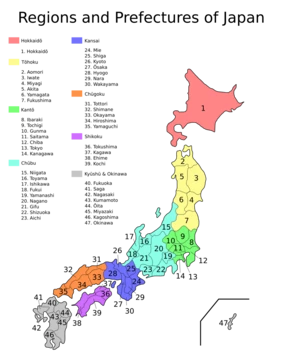
Tochigi Prefecture sits in the northern part of Japan’s Kantō region on Honshu, one of only eight prefectures in the country without a coastline. It borders Fukushima to the north, Gunma to the west, Saitama to the south, and Ibaraki to the southeast. The capital and largest city is Utsunomiya; other major cities include Oyama, Tochigi, and Ashikaga. The prefecture covers 6,408 square kilometers and had a population of about 1.9 million as of June 2023.
The northern half is mountainous and draws many tourists. The Nasu area is known for its hot springs, local sake, ski resorts, the Imperial Family’s villa, and a Shinkansen station. The city of Nikkō is home to ancient Shintō shrines and Buddhist temples that together form a UNESCO World Heritage Site. Tochigi has a humid temperate climate with wide temperature swings: dry, arid winters and humid summers with frequent thunderstorms.
Before the Meiji Restoration, the area was called Shimotsuke Province. In the early 1400s, the Ashikaga Gakkō—Japan’s oldest institution of higher learning—was re-established here, hosting over 3,000 students by the 1500s. Saint Francis Xavier described it as the best university in Japan. After shōgun Tokugawa Ieyasu died in the early 1600s, the Nikkō Tōshō-gū shrine was built in 1617 on what the shōguns considered holy ground to honor him. This put Nikkō on the national map, and later Tokugawa rulers built the Nikkō Kaidō road connecting the area to Edo and staged lavish processions to worship Ieyasu. In the late 1800s, after the Tokugawa shogunate fell, the new government created the prefectural system. The capital was first set in Tochigi City in 1873, then moved to Utsunomiya in 1884. Following the 2011 Fukushima Daiichi nuclear disaster, radioactivity levels in Utsunomiya were measured at 33 times normal.
Utsunomiya is famous for its many gyoza specialty shops and also hosts Bell Mall, one of the largest shopping centers in the northern Kantō region. The prefecture contains fourteen cities and several towns within its districts. About 21% of its land is designated as natural parks, including Nikkō National Park, Oze National Park, and eight prefectural parks.
Tochigi’s economy benefits from its proximity to Tokyo. The Kiyohara Industrial Complex is one of Japan’s largest inland industrial zones. Manufacturing makes up 36.6% of the prefecture’s output, led by vehicle parts and accessories, followed by vehicles, radios and televisions, pharmaceuticals, and wireless communication equipment. Agriculture generates about 274 billion yen annually, with rice, vegetables, and livestock prominent. Tochigi is especially known for strawberries, Chinese chives, and Japanese pears sold domestically and abroad. Forests cover roughly 55% of the prefecture, and mushrooms—mainly shiitake—account for half of the forest industry’s output, worth about 5.6 billion yen.
The prefecture hosts numerous universities and colleges, including Ashikaga Institute of Technology, Bunsei University of Art, Dokkyo University School of Medicine, Hakuoh University, International University of Health and Welfare, Jichi Medical University, Oyama National College of Technology, Sakushin Gakuin University, Sano College, Teikyo University, several Tochigi Colleges of Industry and Technology, Utsunomiya Kyowa University, and Utsunomiya University.
Sports teams based in Tochigi include the football clubs Tochigi City FC and Tochigi SC, the ice hockey team Nikkō Ice Bucks, the basketball team Utsunomiya Brex, and the Twin Ring Mote circuit for motorsports.
- Capital
- Utsunomiya
- Largest City
- Utsunomiya
- Region
- Kantō region, Honshu
- Known For
- Nikkō UNESCO site, Nasu resorts, gyoza, strawberries
Lore & Background
Tochigi Prefecture is an inland prefecture in the Kantō region of Honshu, Japan, bordered by Fukushima, Gunma, Saitama, and Ibaraki prefectures. Its terrain features the largest open plain in the Kantō region at its center, while the northern area is mountainous, containing Mount Shirane, Mount Nantai, and Mount Nasudake. Major rivers such as the Kinugawa, Nakagawa, and Watarase originate here, flowing across the plain to the Pacific Ocean. The climate is humid temperate, with dry, arid winters and humid summers marked by frequent thunderstorms. Over a fifth of the prefecture’s land is designated as natural parks, including Nikkō National Park and Oze National Park. The capital and largest city is Utsunomiya, known for its many gyoza shops and a major shopping mall. Other significant cities include Oyama, Tochigi, and Ashikaga. The northern Nasu area is a popular tourist destination, noted for its hot springs, local sake, ski resorts, an Imperial Family villa, and a Shinkansen station. Nikkō, home to ancient Shintō shrines and Buddhist temples, is a UNESCO World Heritage Site. Historically, the region was Shimotsuke Province before the Meiji Restoration.
Reader's Guide
Tochigi Prefecture holds significance as one of Japan's few inland prefectures, combining historical, cultural, and industrial importance. Its UNESCO World Heritage Site in Nikkō, including the Nikko Tōshō-gū shrine and surrounding temples, draws international visitors and reflects the legacy of the Tokugawa shogunate. The prefecture's northern region, with the Nasu area's onsens, ski resorts, and Imperial Family villa, contributes to its tourism appeal. Economically, Tochigi is a major industrial hub due to its proximity to Tokyo, hosting the Kiyohara Industrial Complex and manufacturing vehicle parts, electronics, and pharmaceuticals. Agriculture also thrives, with strawberries, Chinese chives, and Japanese pears exported widely. The prefecture's transportation network, including the Tōhoku Shinkansen and expressways, connects it to the capital and other regions. The Ashikaga Gakkō, Japan's oldest higher education institution, adds historical depth. Tochigi's legacy is thus a blend of ancient shrines, modern industry, and natural attractions.
Did You Know?
- Tochigi is one of only eight inland prefectures in Japan.
- The Ashikaga Gakkō, re-established in the early 15th century, was introduced by Saint Francis Xavier as the best university in Japan.
More in Prefectures Of Japan 1-24
Spotted an error? Know more?
This is a living reference — every entry is fact-audited, and reader corrections feed straight into our audit queue. Suggest an edit · See this site's audit record