Hiroshima Prefecture
Prefecture in Chūgoku region, known for atomic bombing and UNESCO sites.

via Wikipedia: Hiroshima Prefecture · see source
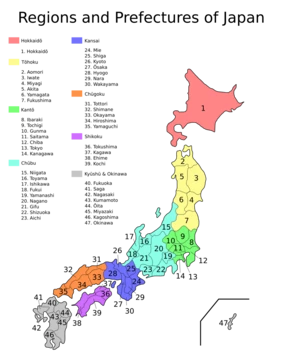
Hiroshima Prefecture (広島県, Hiroshima-ken) is a prefecture of Japan located in the Chūgoku region of Honshu. With a population of 2,811,410 as of 1 June 2019 and a geographic area of 8,479 km² (3,274 sq mi), it borders Okayama Prefecture to the east, Tottori Prefecture to the northeast, Shimane Prefecture to the north, and Yamaguchi Prefecture to the southwest. It also borders Ehime Prefecture for 74 metres (243 ft) on Hyōtanjima. Hiroshima is the capital and largest city, and the largest city in the Chūgoku region. Known globally for the atomic bombing of 1945, Hiroshima has since rebuilt into a major regional center of industry, education, and culture. Its demographic profile is particularly significant from a population-studies perspective: the city has undergone dramatic population reconstruction after WWII, experienced the demographic transitions associated with Japan’s rapid economic growth, and now faces the contemporary challenges of low fertility, population aging, and gradual population decline.
- Population
- 2,811,410 (1 June 2019)
- Area
- 8,479 km² (3,274 sq mi)
- Capital
- Hiroshima
- Region
- Chūgoku region, Honshu
- UNESCO Sites
- Atomic Dome and Itsukushima Shrine
Verified Timeline
Lore & Background
The area around Hiroshima was formerly divided into Bingo Province and Aki Province. This location has been a center of trade and culture since the beginning of Japan's recorded history. Hiroshima is a traditional center of the Chūgoku region and was the seat of the Mōri clan until the Battle of Sekigahara. Hiroshima Prefecture lies in the middle of Japan. Most of the prefecture consists of mountains leading towards Shimane Prefecture; and rivers produce rich plains near the coast. The province faces Shikoku across the Seto Inland Sea. Hiroshima Bay opens on the Inland Sea. The prefecture also includes many small islands. The sheltered nature of the Inland Sea makes Hiroshima's climate very mild. As of 1 April 2014, 4% of the total land area of the prefecture was designated as Natural Parks (the lowest percentage of any prefecture), namely Setonaikai National Park; Hiba-Dōgo-Taishaku and Nishi-Chūgoku Sanchi Quasi-National Parks; and six Prefectural Natural Parks.
Reader's Guide
Hiroshima Prefecture is one of the three prefectures of Japan with more than one UNESCO World Heritage Site. The two such sites are the Atomic Dome in Hiroshima, one of the few remnants of prewar Hiroshima following the atomic bombing in 1945, and the Itsukushima Shrine in Miyajima, famed for filling with water and appearing to 'float' during high tide. Hiroshima's main industries include automobiles (Mazda is headquartered there) and tourism in those two World Heritage Sites. Components of the economy are primary industry, secondary industry, and tertiary industry, which compose 0.6%, 32.6%, and 66.2% in 2015. Value of production of manufacturing is 10,343 billion yen in 2016, which is the 10th largest in Japan. After 2012, production of manufacturing is continuously increasing in 2015. The prefecture hosts numerous universities, including Hiroshima University, and sports teams such as Sanfrecce Hiroshima (football) and the Hiroshima Toyo Carp (baseball).
Did You Know?
- Hiroshima Prefecture borders Ehime Prefecture for 74 metres (243 ft) on Hyōtanjima.
- As of 1 April 2014, only 4% of Hiroshima Prefecture's land area was designated as Natural Parks, the lowest percentage of any prefecture.
- Hiroshima Prefecture is one of only three prefectures in Japan with more than one UNESCO World Heritage Site.
- The Itsukushima Shrine in Miyajima is famed for filling with water and appearing to 'float' during high tide.
- Mazda, the automobile manufacturer, is headquartered in Hiroshima Prefecture.
More in Prefectures Of Japan 1-24
Related in Prefectures Of Japan
Links follow this subject's own source article.
Elsewhere in the Prefectures Of Japan universe
Spotted an error? Know more?
This is a living reference — every entry is fact-audited, and reader corrections feed straight into our audit queue. Suggest an edit · See this site's audit record