Nara Prefecture
Ancient cradle of Japanese civilization with a wealth of UNESCO sites.

Wikipedia / Wikimedia Commons
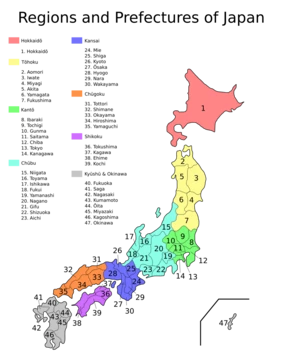
Nara Prefecture is an inland prefecture of Japan located in the Kansai region of Honshu. As of 2020, it has a population of 1,321,805 and a geographic area of 3,691 square kilometres (1,425 sq mi). Nara is the capital and largest city, with other major cities including Kashihara, Ikoma, and Yamatokōriyama. Nara Prefecture is located in the center of the Kii Peninsula on Japan's Pacific Ocean coast, and is one of only eight inland prefectures. It has the distinction of having more UNESCO World Heritage listings than any other prefecture in Japan.
- UNESCO World Heritage listings
- more than any other prefecture in Japan
Verified Timeline
Lore & Background
The Nara Prefecture region is considered one of the oldest regions in Japan, having been settled for thousands of years, and is widely viewed as the Japanese cradle of civilization. Historically known as Yamato Province, it was the political center of Japan from the third to fourth century, with a poorly documented political force at the foot of Mount Miwa seeking unification. Ancient capitals built on its land include Asuka-kyō, Fujiwara-kyō (694–710), and Heijō-kyō (most of 710–784), the latter two modeled after Chinese capitals with grid layouts. The royal court established relations with Sui and then Tang dynasty China and sent students to learn high civilization. By the 7th century, Nara accepted many immigrants, including refugees of Baekje. The first high civilization with royal patronage of Buddhism flourished in today's Nara city (710–784 AD). In 784, Emperor Kanmu relocated the capital to Nagaoka-kyō, followed by another move in 794 to Heian-kyō, marking the start of the Heian period. Nara's temples remained powerful, earning it the synonym 'Nanto' (meaning 'South Capital') as opposed to Heian-kyō in the north. In 1180, Taira no Shigehira, ordered by his father Taira no Kiyomori, clashed with Nara temples backing Prince Mochihito, leading to Kōfuku-ji and Tōdai-ji being set on fire. During the Kamakura shogunate, Minamoto no Yoritomo supported restoration, and Kōfuku-ji became a de facto regional chief of Yamato Province. The Nanboku-chō period (starting 1336) brought instability, with power struggles in Kōfuku-ji and local clans split between the Southern and Northern courts. Kōfuku-ji recovered control over the province briefly in 1392, but internal power games diminished its influence. During the Sengoku period, Tōdai-ji was set on fire again in 1567 when Matsunaga Hisahide fought for supremacy. The Tokugawa shogunate later ruled Nara city directly and most of Yamato province with a few feudal lords. In the Meiji Restoration, a prefecture named Nara was established in 1868. After the 1871 Abolition of the han system, Nara was merged with other prefectures to encompass all of Yamato province. In 1876, Nara was merged into Sakai, which became part of Osaka in 1881. In 1887, Nara became independent again, with Saisho Atsushi as the first governor. The first prefectural assembly was elected in 1887 and opened its first session in 1888 in the gallery of the main hall of Tōdai temple. The first city, Nara City, was established in 1898.
Reader's Guide
Nara Prefecture holds profound significance as the cradle of Japanese civilization, hosting the earliest imperial capitals and serving as the political center from the third century onward. Its UNESCO World Heritage listings, more than any other Japanese prefecture, underscore its enduring cultural and historical importance, particularly through sites like the ancient capitals and the Sacred Sites and Pilgrimage Routes in the Kii Mountain Range. The prefecture's history reflects the rise of Buddhism under royal patronage, the influence of Chinese civilization, and the resilience of its temples through periods of destruction and restoration, such as the fires of 1180 and 1567. Economically, Nara has long been tied to Osaka, with many inhabitants commuting there for work or study, a pattern established during the Edo period when its economy was incorporated into Osaka's commercial sphere. Geographically, Nara is an inland prefecture dominated by mountains and forests, with the Nara Basin containing the highest concentration of population. Its climate features inland characteristics with significant temperature variance, with winter averages about 3 to 5 °C and summer averages 25 to 28 °C. The prefecture's modern form was shaped by the Meiji Restoration and subsequent administrative mergers, culminating in its independence in 1887. Today, Nara remains a vital repository of Japan's ancient heritage, balancing its historical legacy with contemporary economic links to the Kansai region.
Did You Know?
- Nara Prefecture has more UNESCO World Heritage listings than any other prefecture in Japan.
- Nara was one of Imperial Japan's earliest capital cities, hosting capitals like Asuka-kyō, Fujiwara-kyō (694–710), and Heijō-kyō (most of 710–784).
- The tallest mountain in Nara Prefecture, and in the Kansai region, is Mount Hakkyō.
- About 17% of the total land area of Nara Prefecture is designated as National Park land.
- The first city in Nara Prefecture, Nara City, was established in 1898.
Ancient Capital & Cradle of Civilization
Nara Prefecture occupies a singular place in Japanese history as what is widely regarded as the nation's cradle of civilization. The region has been continuously settled for thousands of years, and since at least the third century, the Yamato area at the foot of Mount Miwa served as the political heart of the archipelago. Three ancient imperial capitals—Asuka-kyō, Fujiwara-kyō (694–710), and Heijō-kyō (710–784)—were constructed on Nara's land. The latter two were deliberately modeled on contemporary Chinese capitals, adopting grid-pattern street layouts that reflected the influence of the Sui and Tang dynasties. The imperial court dispatched students to the Middle Kingdom to absorb its advanced culture. By the seventh century, Nara also became a refuge for immigrants, including Baekje survivors fleeing the war disturbances of the southern Korean Peninsula. Under royal patronage, Buddhism flourished as the first high civilization in the region between 710 and 784, establishing a cultural foundation that persists to this day.
Temples, Destruction & Rebirth
The great temples of Nara—particularly Tōdai-ji and Kōfuku-ji—have endured a remarkable cycle of destruction and reconstruction that shaped the prefecture's cultural identity. In 1180, Taira no Shigehira, acting on his father Kiyomori's orders to suppress opposition backed by these temples, set both ablaze, causing vast destruction of architectural heritage. After the Minamoto rose to power, Yoritomo's patronage enabled Kōfuku-ji to not only recover but become the de facto regional authority of Yamato Province. The Nanboku-chō period, beginning in 1336, fractured the temple community along South and North court loyalties, while local samurai clans gradually eroded Kōfuku-ji's dominance. During the Sengoku period, Tōdai-ji was burned yet again in 1567 by Matsunaga Hisahide amid his conflict with the Miyoshi family. Despite these repeated catastrophes, Nara Prefecture today holds more UNESCO World Heritage listings than any other prefecture in Japan, a testament to the enduring legacy of its sacred architecture.
Political Turmoil & Shifting Power
Nara's history is punctuated by dramatic political upheavals that reshaped its governance. When Emperor Kanmu relocated the capital to Nagaoka-kyō in 784 and then to Heian-kyō in 794, Nara was demoted to the title Nanto, or South Capital, yet its temples retained enormous influence. The late Heian period saw the Taira clan clash directly with Nara's temple powers in 1180. The medieval era brought further instability: the Nanboku-chō split divided Kōfuku-ji's own community and local clans into rival factions, and the eventual surrender of the South Court in 1392 briefly restored temple control before internal strife opened the door for samurai warlords. The Sengoku chaos drew the entire province into conflict, with successive lords appointed by Oda Nobunaga and Toyotomi Hideyoshi. Ultimately, the Tokugawa shogunate assumed direct rule over Nara city and most of Yamato Province, allocating a handful of feudal lords at Kōriyama, Takatori, and other locations, ending centuries of temple-dominated governance.
Modern Prefecture & the Osaka Connection
Nara Prefecture in its current form is a relatively young administrative entity, officially established in 1887 when it separated from Osaka Prefecture, with Saisho Atsushi serving as its first governor. The first prefectural assembly was elected that same year and held its inaugural session in 1888 within the gallery of Tōdai-ji's main hall. The 1889 Great Meiji mergers subdivided the prefecture's 16 districts into 154 municipalities—10 towns and 144 villages—and the first city, Nara City, was not established until 1898. Today, Nara is one of only eight inland prefectures in Japan, situated in the center of the Kii Peninsula. With a population of approximately 1.32 million spread across 3,691 square kilometres, it borders Kyoto, Osaka, Wakayama, and Mie prefectures. Despite its cultural prestige, Nara maintains a deep economic dependency on neighboring Osaka, where many residents commute daily for work or study, a pattern that has characterized the region since the commercial prosperity of the eighteenth century.
Gallery
Frequently Asked Questions
What is Nara Prefecture?
Nara Prefecture is an inland prefecture in the Kansai region of Honshu, Japan, with Nara city serving as its seat. It covers roughly 3,691 square kilometres and was home to about 1.32 million people at the 2020 census.
Why is Nara Prefecture called Japan's cradle of civilization?
The area was inhabited for thousands of years and hosted several of the earliest capital cities of Imperial Japan, making it one of the oldest continuously settled regions in the country. That layered history is why it is widely regarded as the birthplace of Japanese civilization.
How many UNESCO World Heritage sites does Nara Prefecture hold?
Nara Prefecture holds more UNESCO World Heritage listings than any other prefecture in Japan. That record cements its reputation as the nation's premier destination for ancient cultural and religious landmarks.
Is Nara Prefecture a coastal or inland region?
Nara is one of only eight inland prefectures in all of Japan, so it has no coastline at all. Its landscape is shaped by mountains, rivers, and plains within the Kansai region rather than by any sea front.
What role does Nara Prefecture play in Japanese history and culture?
As the site of some of the empire's earliest capitals, Nara anchors the national story of Japan's own origins and cultural identity. Its dense cluster of ancient temples, shrines, and heritage sites effectively makes it a living museum of the country's formative era.
More in Prefectures Of Japan 25-39
Related in Prefectures Of Japan
Links follow this subject's own source article.
Elsewhere in the Prefectures Of Japan universe
Spotted an error? Know more?
This is a living reference — every entry is fact-audited, and reader corrections feed straight into our audit queue. Suggest an edit · See this site's audit record