Nagano Prefecture
Landlocked prefecture hosting the 1998 Winter Olympics.

via Wikipedia: Nagano Prefecture · see source
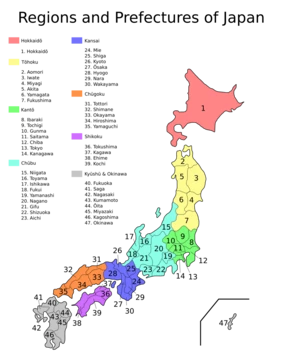
Nagano Prefecture (長野県, Nagano-ken) is a landlocked prefecture of Japan located in the Chūbu region of Honshu. As of 1 July 2023, it has a population of 2,007,682 and a geographic area of 13,561.56 square kilometres. It borders Niigata Prefecture to the north, Gunma Prefecture to the northeast, Saitama Prefecture to the east, Yamanashi Prefecture to the southeast, Shizuoka Prefecture and Aichi Prefecture to the south, and Gifu Prefecture and Toyama Prefecture to the west. Nagano is the prefecture's capital and largest city. The prefecture is known for its impressive highland areas of the Japanese Alps, including most of the Hida Mountains, Kiso Mountains, and Akaishi Mountains, and contains nine of the twelve highest mountains in Japan. It gained international recognition as a winter sports tourist destination and as the host of the 1998 Winter Olympics.
- capital
- Nagano
- population
- 2,007,682 (as of 1 July 2023)
- area
- 13,561.56 km²
- region
- Chūbu, Honshu, Japan
- known_for
- Winter sports tourism, 1998 Winter Olympics, Japanese Alps, highest life expecta
Verified Timeline
Lore & Background
Nagano Prefecture borders more prefectures than any other in Japan: Niigata, Gunma, Saitama, Yamanashi, Shizuoka, Aichi, Gifu, and Toyama. It contains the point furthest from the sea in all of Japan, located in the city of Saku. Its mountains have made it relatively isolated, and many visitors come for its mountain resorts and hot springs. The climate is predominantly alpine with warm summers, cold snowy winters, and less intense humidity than the lower coastal areas. As of 1 April 2014, 21% of the total land area of the prefecture are natural parks, including the Chichibu Tama Kai, Chūbu-Sangaku, Jōshin'etsu-kōgen, and Minami Alps national parks. One of its lakes, Lake Kizaki, is a beach resort popular for its water attractions and games. The prefecture also contains one of the world's highest geysers (40–50 meters) in Suwa.
Reader's Guide
Nagano Prefecture is significant for its role as a winter sports tourist destination, gaining international recognition after hosting the 1998 Winter Olympics. Its economy is large and diversified, focusing on electronics, information technology, precision machinery, agriculture and food products, and tourism, with a total GDP of about ¥8.5 trillion (2017). Several large Japanese companies have production facilities in Nagano Prefecture, such as Citizen Watch, MinebeaMitsumi, Seiko Epson, and Vaio. The prefecture has the highest life expectancy nationwide, with an average of 87.18 years for women and 80.88 for men. It is served by the Hokuriku Shinkansen railway line with direct services to Tokyo, Toyama, and Kanazawa. Notable landmarks include Matsumoto Castle, one of Japan's national treasures, and Zenkō-ji temple. The prefecture also contains nine of the twelve highest mountains in Japan. There are two local J.League clubs: AC Nagano Parceiro and Matsumoto Yamaga FC.
Did You Know?
- Nagano Prefecture borders more prefectures than any other in Japan—eight in total.
- It contains the point furthest from the sea in all of Japan, located in the city of Saku.
- Nine of the twelve highest mountains in Japan are found in Nagano Prefecture.
- The prefecture has the highest life expectancy nationwide: 87.18 years for women and 80.88 for men.
- One of the world's highest geysers (40–50 meters) is located in Suwa, Nagano Prefecture.
More in Prefectures Of Japan 1-24
Related in Prefectures Of Japan
Links follow this subject's own source article.
Elsewhere in the Prefectures Of Japan universe
Spotted an error? Know more?
This is a living reference — every entry is fact-audited, and reader corrections feed straight into our audit queue. Suggest an edit · See this site's audit record