Shizuoka Prefecture
Pacific coast prefecture home to Mount Fuji and major industries.

Wikipedia / Wikimedia Commons
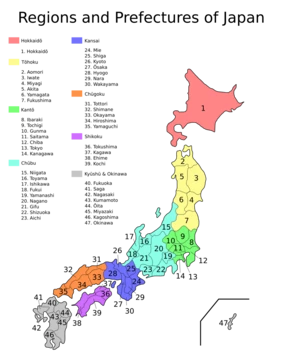
Shizuoka Prefecture (静岡県, Shizuoka-ken) is a prefecture of Japan located in the Chūbu region of Honshu. As of September 2023, it has a population of 3,555,818 and a geographic area of 7,777.42 km². Shizuoka borders Kanagawa Prefecture to the east, Yamanashi Prefecture to the northeast, Nagano Prefecture to the north, and Aichi Prefecture to the west. Shizuoka is the capital and Hamamatsu is the largest city. The prefecture is located on Japan's Pacific Ocean coast and features Suruga Bay, the Izu Peninsula, and Lake Hamana. Mount Fuji, the tallest volcano in Japan, is partially located in Shizuoka on the border with Yamanashi Prefecture.
- Capital
- Shizuoka
- Largest City
- Hamamatsu
- Population (2023)
- 3,555,818
- Area
- 7,777.42 km²
- Region
- Chūbu, Honshu, Japan
- Notable Industries
- Motorcycles, musical instruments, green tea
- Major Geographic Features
- Mount Fuji, Suruga Bay, Izu Peninsula, Lake Hamana
Lore & Background
Shizuoka Prefecture was established from the former Tōtōmi, Suruga and Izu provinces. The area was the home of the first Tokugawa shōgun, Tokugawa Ieyasu, who held the region until he conquered the lands of the Hōjō clan in the Kantō region and placed land under the stewardship of Toyotomi Hideyoshi. After becoming shōgun, Tokugawa took the land back for his family and put the area around modern-day Shizuoka City under the direct supervision of the shogunate. With the creation of the Shizuoka han from the Sunpu Domain in 1868, it once again became the residence of the Tokugawa family. Shizuoka has a significant motoring heritage as the founding location of Honda, Suzuki, and Yamaha, and is home to the Fuji International Speedway. The prefecture accounts for 28% of Japanese motorcycle exports. Yamaha and Kawai are both global piano brands that got their start in Shizuoka prefecture in the early twentieth century. Shizuoka is also famed for supplying most of Japan's tea and maguro tuna.
Reader's Guide
Shizuoka Prefecture holds a unique place in Japanese history and industry. Its historical role as the domain of Tokugawa Ieyasu, the first Tokugawa shōgun, ties it directly to the unification and governance of early modern Japan. The region's later development into a hub for global manufacturing—particularly motorcycles and musical instruments—demonstrates a transition from feudal power to industrial innovation. Companies like Honda, Suzuki, Yamaha, and Kawai all originated here, making Shizuoka a center of technological and economic influence. The prefecture's natural features, including Mount Fuji and Suruga Bay, contribute to its cultural and touristic significance. Its location on the historic Tokaido route between Tokyo and Nagoya further underscores its role as a corridor of commerce and travel. Shizuoka's legacy is thus one of blending tradition with modernity, from shogunate rule to world-leading industry.
Did You Know?
- Shizuoka Prefecture accounts for 28% of Japanese motorcycle exports.
- Yamaha and Kawai both got their start in Shizuoka prefecture in the early twentieth century.
- Mount Fuji, the tallest volcano in Japan, is partially located in Shizuoka on the border with Yamanashi Prefecture.
- Shizuoka Prefecture was established from the former Tōtōmi, Suruga and Izu provinces.
- As of April 2012, 11% of the total land area of the prefecture was designated as natural parks.
More in Prefectures Of Japan 25-39
Related in Prefectures Of Japan
Links follow this subject's own source article.
Elsewhere in the Prefectures Of Japan universe
Spotted an error? Know more?
This is a living reference — every entry is fact-audited, and reader corrections feed straight into our audit queue. Suggest an edit · See this site's audit record