Shiga Prefecture
Inland prefecture encircling Japan's largest lake, Lake Biwa.

Wikipedia / Wikimedia Commons
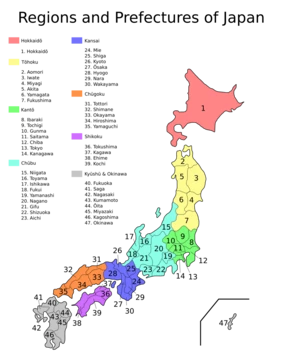
Shiga Prefecture is an inland prefecture of Japan in the Kansai region of Honshu. It encircles Lake Biwa, the largest freshwater lake in Japan, and 37% of its total land area is designated as Natural Parks, the highest of any prefecture. Its capital and largest city is Ōtsu, with other major cities including Kusatsu, Nagahama, and Higashiōmi. Shiga Prefecture is home to Ōmi beef, the Eight Views of Ōmi, and Hikone Castle, one of four national treasure castles in Japan. The prefecture's southern half is located adjacent to the former capital city of Kyoto and forms part of Greater Kyoto, the fourth-largest metropolitan area in Japan.
- Population
- 1,398,972 (as of 1 February 2025)
- Area
- 4,017 km² (1,551 sq mi)
- Capital
- Ōtsu
- Region
- Kansai region of Honshu
- Known for
- Lake Biwa, Hikone Castle, Ōmi beef, highest percentage of Natural Parks in Japan
Verified Timeline
Lore & Background
Shiga was known as Ōmi Province or Gōshū before the prefectural system was established. During the period 667 to 672, Emperor Tenji founded a palace in Otsu. In 742, Emperor Shōmu founded a palace in Shigaraki. In the early Heian period, Saichō was born in the north of Otsu and founded Enryaku-ji, the center of Tendai and a UNESCO World Heritage Site and monument of Ancient Kyoto now. During the Azuchi-Momoyama period, Oda Nobunaga subjugated Omi and built Azuchi Castle on the eastern shores of Lake Biwa in 1579. In 1600, Ishida Mitsunari, born in the east of Nagahama and based in Sawayama Castle, made war against Tokugawa Ieyasu in Sekigahara, Gifu. After the battle, Ieyasu made Ii Naomasa a new lord of Sawayama. Naomasa established the Hikone Domain, later known for Ii Naosuke, who became the Tokugawa shogunate's Tairō and concluded commercial treaties with the Western powers, ending Japan's isolation from the world in the 19th century. With the abolition of the han system, eight prefectures were formed in Omi, unified into Shiga Prefecture in September 1872. From August 1876 to February 1881, southern Fukui Prefecture had been incorporated into Shiga Prefecture. In 2015, Shiga Governor Taizō Mikazuki conducted a survey asking citizens whether they felt it necessary to change the name of the prefecture, partly to raise its profile as a destination for domestic tourism.
Reader's Guide
Shiga Prefecture holds historical significance as the site of Azuchi Castle, built by Oda Nobunaga in 1579, and Hikone Castle, one of four national treasure castles in Japan. Its location adjacent to Kyoto made it a crossroads of power during the Heian and Edo periods. The prefecture's economy is notable: according to the Cabinet Office's statistics in 2014, the manufacturing sector accounted for 35.4% of Shiga's economic production, the highest proportion in Japan. Environmentally, 37% of its total land area is designated as Natural Parks as of 1 April 2014, the highest of any prefecture, including Biwako and Suzuka Quasi-National Parks. Culturally, Biwa Town (a part of Nagahama) is home to The Tonda Traditional Bunraku Puppet Troupe. Museums include the Sagawa Art Museum in Moriyama, the Lake Biwa Museum in Kusatsu, and the Miho Museum in Kōka. In Kōka, a ninja house is preserved as a visitor center. Festivals include the hikiyama matsuri (floats parade) held in ten areas including Nagahama each April, one of the three major hikiyama festivals in Japan, designated an Important Intangible Cultural Property in 1979.
Did You Know?
- Shiga Prefecture has the highest percentage of land designated as Natural Parks of any prefecture in Japan, at 37% as of 1 April 2014.
- Lake Biwa, the largest freshwater lake in Japan, occupies one-sixth of Shiga Prefecture's area.
- In 1936, snow reached a depth of 5.6 metres (18 ft) in Nakanokawachi, the northernmost village of Shiga.
- The manufacturing sector accounted for 35.4% of Shiga's economic production in 2014, the highest proportion in Japan.
- As of December 2016, 30% of the 25,040 foreigners living in Shiga were Brazilians.
More in Prefectures Of Japan 25-39
Related in Prefectures Of Japan
Links follow this subject's own source article.
Elsewhere in the Prefectures Of Japan universe
Spotted an error? Know more?
This is a living reference — every entry is fact-audited, and reader corrections feed straight into our audit queue. Suggest an edit · See this site's audit record