Kōchi Prefecture
A mountainous prefecture on Shikoku, birthplace of Sakamoto Ryōma.

via Wikipedia: Kōchi Prefecture · see source
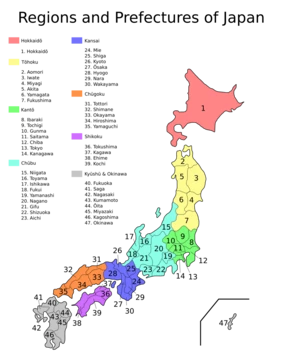
Kōchi Prefecture (高知県, Kōchi-ken) is a prefecture of Japan located on the island of Shikoku. It has a population of 669,516 (1 April 2023) and a geographic area of 7,103 km² (2,742 sq mi). Kōchi Prefecture borders Ehime Prefecture to the northwest and Tokushima Prefecture to the northeast. Kōchi is the capital and largest city. Historically known as Tosa Province, it was controlled by the Chōsokabe clan in the Sengoku period and the Yamauchi clan during the Edo period. Kōchi Prefecture is the birthplace of revolutionary Sakamoto Ryōma, who became one of the main instigators of the Meiji Restoration. It is home to Kōchi Castle, considered the most intact Japanese castle, and the Shimanto River, one of the few undammed rivers in Japan.
- Capital
- Kōchi
- Population
- 669,516 (1 April 2023)
- Area
- 7,103 km² (2,742 sq mi)
- Largest city
- Kōchi
- Island
- Shikoku
- Notable feature
- Kōchi Castle (considered the most intact Japanese castle)
- Notable river
- Shimanto River (one of the few undammed rivers in Japan)
Lore & Background
Kōchi Prefecture comprises the southwestern part of the island of Shikoku, facing the Pacific Ocean. It is bordered by Ehime to the north-west and Tokushima to the north-east. It is the largest but least populous of Shikoku's four prefectures. Most of the province is mountainous, and in only a few areas such as around Kōchi and Nakamura is there a coastal plain. Kōchi Prefecture has the highest percentage of land covered in mountains out of all Japanese prefectures at 89%, with the national average being 66%. Inamura-yama in Tosa-cho is the highest peak in Kōchi prefecture with an altitude of 1,506 meters above sea level. The Kuroshio Current flows by Kōchi Prefecture's coast, and its climate is heavily influenced by it. Even during winter the water is still warm, and causes frequent typhoons. Kōchi Prefecture experiences the 2nd most typhoons out of all Japanese prefectures after Kagoshima Prefecture. The 1934 Muroto Typhoon was especially notorious, with the lowest central pressure of any recorded typhoon in Japan at 911.6 hPa when it made landfall on the Muroto Cape. The Ashizuri and Muroto capes are known for their strong winds. Historically, Kōchi Prefecture has not suffered from a lack of water, however river management has been a consistent issue. In the early Edo Period, samurai Nonaka Kenzan oversaw large scale improvements to the Tosa Domain's major rivers. Modern Kōchi Prefecture is known for its river management and minimal water damage despite receiving a large amount of rainfall.
Reader's Guide
Kōchi Prefecture holds historical significance as the former Tosa Province. In the Kujiki, first recorded governments were Hata (in the west) and Tosa (in the center). The Nihon Shoki contains the first report from an official in the Kōchi region, describing damages caused by the 684 Hakuhō earthquake, from which it can be inferred that by 684 at the latest, the Tosa Province had been established. Up until the Genpei War, 106 governors were appointed to govern the Tosa Province. During the Kamakura period, Kajiwara Tomokage was appointed as the first military governor, and later the Hōjō Clan served as military governor. After the fall of the Kamakura Shogunate, Shikoku Island fell under the control of the Hosokawa Clan. Kōchi city is the birthplace of noted revolutionary Sakamoto Ryōma. The prefecture preserves cultural heritage through Kōchi Castle, one of only 12 original castles left in Japan, and the Shimanto River, the only undammed river in Japan. Its cuisine includes katsuo no tataki – skipjack tuna or bonito which is lightly seared, traditionally over straw. Sawachi is a style of meal in Kochi prefecture, characterized by 'its freeness in the arrangement of food on a large dish,' representing the cultural climate which dislikes formal arrangements and respects freedom. The Yosakoi Festival, a unique style of dance, originated in Japan and is performed at festivals and events all over the country.
Did You Know?
- Kōchi Prefecture has the highest percentage of land covered in mountains out of all Japanese prefectures at 89%.
- The 1934 Muroto Typhoon had the lowest central pressure of any recorded typhoon in Japan at 911.6 hPa when it made landfall on the Muroto Cape.
- Kōchi Prefecture experiences the 2nd most typhoons out of all Japanese prefectures after Kagoshima Prefecture.
- In the Nihon Shoki, the first report from an official in the Kōchi region described damages caused by the 684 Hakuhō earthquake.
- Kōchi Castle is one of only 12 original castles left in Japan.
More in Prefectures Of Japan 1-24
Related in Prefectures Of Japan
Links follow this subject's own source article.
Elsewhere in the Prefectures Of Japan universe
Spotted an error? Know more?
This is a living reference — every entry is fact-audited, and reader corrections feed straight into our audit queue. Suggest an edit · See this site's audit record