Shiga Prefecture
Inland prefecture encircling Japan's largest lake, Lake Biwa.
Shiga Prefecture is a landlocked region in Japan’s Kansai area, on the island of Honshu. It surrounds Lake Biwa, the country’s largest freshwater lake, and boasts the highest proportion of designated Natural Parks of any prefecture—37% of its land. The capital, Ōtsu, is also the biggest city, followed by Kusatsu, Nagahama, and Higashiōmi. The prefecture’s southern half sits next to Kyoto, the former capital, and is part of Greater Kyoto, Japan’s fourth-largest metro area. Notable local products and sites include Ōmi beef, the Eight Views of Ōmi, and Hikone Castle, one of just four national treasure castles in Japan.
Before the prefectural system, the area was known as Ōmi Province or Gōshū. Ōmi lay at the crossroads of eastern and western Japan, neighboring Nara and Kyoto. Emperor Tenji set up a palace in Ōtsu from 667 to 672, and Emperor Shōmu built one in Shigaraki in 742. In the early Heian period, Saichō, born north of Ōtsu, founded Enryaku-ji, a UNESCO World Heritage Site and part of the Ancient Kyoto monuments, which became the center of Tendai Buddhism. During the Heian era, the Sasaki clan ruled Ōmi, followed by the Rokkaku, Kyōgoku, and Azai clans. In the Azuchi-Momoyama period, Oda Nobunaga conquered Ōmi and built Azuchi Castle on Lake Biwa’s eastern shore in 1579. Notable figures from that time include Tōdō Takatora, Gamō Ujisato, Oichi, Yodo-dono, Ohatsu, and Oeyo. In 1600, Ishida Mitsunari, born east of Nagahama and based at Sawayama Castle, fought Tokugawa Ieyasu at Sekigahara in Gifu. After the battle, Ieyasu gave Sawayama to Ii Naomasa, who founded the Hikone Domain, later known for Ii Naosuke. Naosuke served as Tairō of the Tokugawa shogunate and signed commercial treaties with Western powers, ending Japan’s isolation in the 19th century. Other domains, like Zeze, also ruled parts of Ōmi.
When the han system was abolished, eight prefectures formed in Ōmi. They merged into Shiga Prefecture in September 1872, named after Shiga District because Ōtsu belonged to it until 1898. From August 1876 to February 1881, southern Fukui Prefecture was incorporated into Shiga. In 2015, Governor Taizō Mikazuki surveyed residents about whether to rename the prefecture, partly to boost its appeal for domestic tourism.
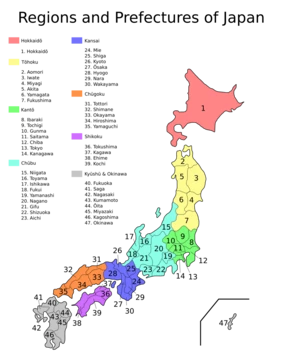
Shiga borders Fukui to the north, Gifu to the east, Mie to the southeast, and Kyoto to the west. Lake Biwa sits at the prefecture’s center, covering one-sixth of its area. The Seta River, the only natural outlet from the lake, flows to Osaka Bay through Kyoto. Most other rivers feed into the lake. Many lagoons around Lake Biwa were drained in the 1940s, but one preserved lagoon in Omihachiman was named the first Important Cultural Landscape in 2006. The lake splits the prefecture into four zones: centered on Nagahama, Imazu, Hikone, and Ōtsu. Plains stretch along the eastern shore, while mountain ranges enclose the area—the Hira Mountains and Mount Hiei to the west, the Ibuki Mountains to the northeast, and the Suzuka Mountains to the southeast. Mount Ibuki is the highest peak. In Yogo, a small lake is tied to a legend similar to the Western swan maiden tale. Climate varies sharply: southern Shiga is warm, but the north is cold with heavy snow and many ski resorts. In Nakanokawachi, the northernmost village, snow reached a record depth in 1936. As of April 2014, 37% of the land was designated as Natural Parks—the highest in Japan—including Biwako and Suzuka Quasi-National Parks, plus Kotō, Kutsuki-Katsuragawa, and Mikami-Tanakami-Shigaraki Prefectural Natural Parks.
The prefecture has thirteen cities: Ōtsu, Kusatsu, Nagahama, Higashiōmi, Hikone, and others. Towns are organized into districts. In politics, Governor Taizō Mikazuki, a former House of Representatives member from Shiga, narrowly won in July 2014 with center-left backing, defeating ex-METI bureaucrat Takashi Koyari (backed by center-right ruling parties) and succeeding Yukiko Kada. He was overwhelmingly reelected in June 2018 against a single communist challenger. The prefectural assembly has 44 members from 16 districts, elected in unified local elections. As of July 2019, the caucuses included LDP (20), Team Shiga (14), JCP (4), Sazanami Club (3), Kōmeitō (2), and one independent. In the National Diet, Shiga sends four directly elected members to the House of Representatives and two to the House of Councillors (one per election). For proportional representation in the lower house, it falls under the Kinki block. As of August 1, 2019, the Diet delegation from Shiga consisted of members from the 2016, 2017, and 2019 elections.
- Population
- 1,398,972 (as of 1 February 2025)
- Area
- 4,017 km² (1,551 sq mi)
- Capital
- Ōtsu
- Region
- Kansai region of Honshu
- Known for
- Lake Biwa, Hikone Castle, Ōmi beef, highest percentage of Natural Parks in Japan
Lore & Background
Shiga was known as Ōmi Province or Gōshū before the prefectural system was established. During the period 667 to 672, Emperor Tenji founded a palace in Otsu. In 742, Emperor Shōmu founded a palace in Shigaraki. In the early Heian period, Saichō was born in the north of Otsu and founded Enryaku-ji, the center of Tendai and a UNESCO World Heritage Site and monument of Ancient Kyoto now. During the Azuchi-Momoyama period, Oda Nobunaga subjugated Omi and built Azuchi Castle on the eastern shores of Lake Biwa in 1579. In 1600, Ishida Mitsunari, born in the east of Nagahama and based in Sawayama Castle, made war against Tokugawa Ieyasu in Sekigahara, Gifu. After the battle, Ieyasu made Ii Naomasa a new lord of Sawayama. Naomasa established the Hikone Domain, later known for Ii Naosuke, who became the Tokugawa shogunate's Tairō and concluded commercial treaties with the Western powers, ending Japan's isolation from the world in the 19th century. With the abolition of the han system, eight prefectures were formed in Omi, unified into Shiga Prefecture in September 1872. From August 1876 to February 1881, southern Fukui Prefecture had been incorporated into Shiga Prefecture. In 2015, Shiga Governor Taizō Mikazuki conducted a survey asking citizens whether they felt it necessary to change the name of the prefecture, partly to raise its profile as a destination for domestic tourism.
Reader's Guide
Shiga Prefecture holds historical significance as the site of Azuchi Castle, built by Oda Nobunaga in 1579, and Hikone Castle, one of four national treasure castles in Japan. Its location adjacent to Kyoto made it a crossroads of power during the Heian and Edo periods. The prefecture's economy is notable: according to the Cabinet Office's statistics in 2014, the manufacturing sector accounted for 35.4% of Shiga's economic production, the highest proportion in Japan. Environmentally, 37% of its total land area is designated as Natural Parks as of 1 April 2014, the highest of any prefecture, including Biwako and Suzuka Quasi-National Parks. Culturally, Biwa Town (a part of Nagahama) is home to The Tonda Traditional Bunraku Puppet Troupe. Museums include the Sagawa Art Museum in Moriyama, the Lake Biwa Museum in Kusatsu, and the Miho Museum in Kōka. In Kōka, a ninja house is preserved as a visitor center. Festivals include the hikiyama matsuri (floats parade) held in ten areas including Nagahama each April, one of the three major hikiyama festivals in Japan, designated an Important Intangible Cultural Property in 1979.
Did You Know?
- Shiga Prefecture has the highest percentage of land designated as Natural Parks of any prefecture in Japan, at 37% as of 1 April 2014.
- Lake Biwa, the largest freshwater lake in Japan, occupies one-sixth of Shiga Prefecture's area.
- In 1936, snow reached a depth of 5.6 metres (18 ft) in Nakanokawachi, the northernmost village of Shiga.
- The manufacturing sector accounted for 35.4% of Shiga's economic production in 2014, the highest proportion in Japan.
- As of December 2016, 30% of the 25,040 foreigners living in Shiga were Brazilians.
More in Prefectures Of Japan 1-24
Related in Prefectures Of Japan
Links follow this subject's own source article.
Spotted an error? Know more?
This is a living reference — every entry is fact-audited, and reader corrections feed straight into our audit queue. Suggest an edit · See this site's audit record