Toyama Prefecture
Industrial hub on the Japan Sea coast with rare glaciers.
Toyama Prefecture sits in Japan’s Chūbu region on Honshu island. As of January 1, 2025, its population is 993,848, spread across 4,247.61 square kilometers. The capital, Toyama City, is also the largest city; other major urban centers include Takaoka, Imizu, and Nanto. Most residents live along Toyama Bay, one of Japan’s biggest bays. The prefecture leads the Japan Sea coast in industrial output, benefiting from cheap electricity generated by abundant hydroelectric resources. It is also home to the only glaciers recognized in East Asia outside of Russia, first identified in 2012. About 30 percent of its land falls within national parks.
Historically, this area was Etchū Province. After the han system was abolished in 1871, it became Niikawa Prefecture, though Imizu District was temporarily assigned to Nanao Prefecture. In 1872, Imizu District was returned by the newly formed Ishikawa Prefecture. Niikawa Prefecture merged into Ishikawa in 1876, but that merger was reversed in 1881, re-establishing the area as Toyama Prefecture. Around 1950, the itai-itai disease outbreak occurred here.
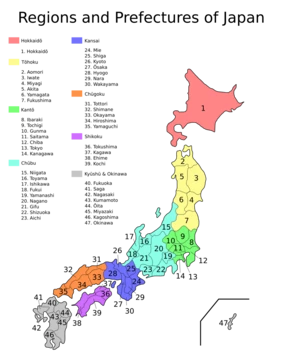
Toyama borders Ishikawa to the west, Niigata to the northeast, Nagano to the southeast, Gifu to the south, and the Sea of Japan to the north. As of April 2012, 30 percent of its land was designated as natural parks: Chūbu-Sangaku and Hakusan National Parks, Noto Hantō Quasi-National Park, and six prefectural natural parks.
Due to mergers in the 2000s, Toyama now has the fewest municipalities of any Japanese prefecture: 10 cities, 2 districts, 4 towns, and 1 village. Before the mergers, it had 9 cities, 18 towns, and 8 villages. The cities are Toyama, Takaoka, Imizu, Nanto, Himi, Kurobe, Oyabe, Tonami, Uozu, and Namerikawa. The towns and villages are distributed across Nakaniikawa District (Kamiichi, Tateyama) and Shimoniikawa District (Asahi, Nyūzen, and the village of Funahashi).
Governors since 1947 include Tetsuji Tachi (April to November 1947), Takekuni Takatsuji (1947–1956), Minoru Yoshida (1956–1969), Kōkichi Nakata (1969–1980), Yutaka Nakaoki (1980–2004), Takakazu Ishii (2004–2020), and Hachirō Nitta (since November 2020).
Agriculture benefits from abundant water from Mount Tate; in 2014, Toyama produced about 2.5 percent of Japan’s rice. Fisheries thrive along the Sea of Japan coast. Manufacturing is led by a historic pharmaceutical industry, followed by electronic parts and devices (including industrial robots and general machinery), and metal products (aluminum, copper). The Kurobe Dam, on the Kurobe River, generates electricity for Kansai Electric Power Company.
Population has remained relatively stable since 1950, according to Japanese census data.
Transportation includes JR West lines (Hokuriku Shinkansen from Tokyo to Tsuruga via Kurobe, Toyama City, and Takaoka; Takayama Main Line from Inotani to Toyama City; Himi Line; Jōhana Line), JR Central’s Takayama Main Line (Gifu to Inotani), the Ainokaze Toyama Railway (Kurikara, Ishikawa to Ichiburi, Niigata via Takaoka and Toyama City), the Manyōsen tram system in Takaoka (including Shinminatokō Line and Takaoka Kidō Line), Toyama Chihō Railway (Main Line, Tateyama Line, Fujikoshi Line, Kamidaki Line), and the Toyama City Tram. Expressways include Hokuriku, Nōetsu, and Tōkai-Hokuriku. Toyama Airport offers domestic flights to Tokyo (1 hour) and Sapporo (1 hour 20 minutes), and international flights to Dalian (2.5 hours via China Southern Airlines) and Shanghai (2.5 hours via Shanghai Airlines).
Tourist sites include the Tateyama Kurobe Alpine Route, Kurobe Gorge Railway, Unazuki Onsen, Gokayama (a UNESCO World Heritage Site), and Mitsui Outlet Park in Hokuriku Oyabe. UNESCO World Heritage cultural sites include Gokayama Historical Village in Nanto City. National treasures include Zuiryū-ji Temple in Takaoka City.
Festivals span the seasons: spring features the All Japan Chindon Competition (mid-April at Toyama Castle Park), the Tonami Tulip Fair (May), and the Marumage Festival (May 17 in Himi). Summer brings the Sassa Narimasa Sengoku Era Festival (late July in Toyama City) and the Japan Wildlife Film Festival (early August). Fall includes the Toyama Festival (September 1) and Owara Kaze no Bon (September 1–3 in Yatsuo area). Winter has the Nanto Toga Soba Festival (mid-February in Toga Village area).
Regional foods include trout sushi (masuzushi), white shrimp (shiro ebi), matured yellowtail (buri), firefly squid (hotaru ika), and fish paste (kamaboko). Regional sake brands are Tateyama, Narimasa, Masuizumi, and Sanshoraku.
Sports teams based in Toyama include Kataller Toyama (football), Toyama Grouses (basketball), Toyama Thunderbirds (baseball), and Takaoka Mariners (rugby union).
International relations include partnerships with Liaoning Province (since 1984), São Paulo State (1985), Oregon State (1991), Primorsky Region (1992), Basel-Stadt (2009), and Andhra Pradesh State (2015).
- Population
- 993,848 (1 January 2025)
- Area
- 4,247.61 km²
- Capital
- Toyama
- Region
- Chūbu (Hokuriku)
- Known for
- Industrial prefecture, glaciers, pharmaceutical industry
Lore & Background
Historically, Toyama Prefecture was Etchū Province. Following the abolition of the han system in 1871, Etchū Province was renamed Niikawa Prefecture, but Imizu District was given to Nanao Prefecture. In 1872 Imizu District was returned by the new Ishikawa Prefecture. In 1876, Niikawa Prefecture was merged into Ishikawa Prefecture, but the merger was voided in 1881 and the area was re-established as Toyama Prefecture. The Itai-itai disease occurred in Toyama around 1950.
Reader's Guide
Toyama Prefecture is significant as the leading industrial prefecture on the Japan Sea coast, benefiting from cheap electricity from abundant hydroelectric resources, including the Kurobe Dam which generates electricity for the Kansai Electric Power Company. It is also notable for containing the only known glaciers in East Asia outside of Russia, first recognized in 2012. The prefecture has a stable population since 1950 and is famous for its historical pharmaceutical industry, which remains a top manufacturing sector in terms of shipment value, followed by electronic parts and devices and metal products. Its geography includes Toyama Bay, one of the largest bays in Japan, and 30% of its area is designated as national parks, including Chūbu-Sangaku and Hakusan National Parks, Noto Hantō Quasi-National Park, and six Prefectural Natural Parks. The prefecture hosts UNESCO World Heritage sites such as Gokayama and national treasures like Zuiryū-ji Temple. Toyama Prefecture has international relations with several regions, including Liaoning Province (since May 9, 1984), São Paulo State (since July 18, 1985), Oregon State (since October 19, 1991), Primorsky Region (since August 26, 1992), Basel-Stadt (since October 26, 2009), and Andhra Pradesh State (since December 29, 2015).
Did You Know?
- Toyama Prefecture contains the only known glaciers in East Asia outside of Russia, first recognized in 2012.
- The Itai-itai disease occurred in Toyama around 1950.
- Kurobe Dam, located on the Kurobe River in Toyama Prefecture, generates electricity for the Kansai Electric Power Company.
- Toyama Prefecture has the fewest municipalities of any prefecture in Japan, with 10 cities, 2 districts, 4 towns, and 1 village.
- 30% of Toyama Prefecture's total land area is designated as Natural Parks.
More in Prefectures Of Japan 1-24
Related in Prefectures Of Japan
Links follow this subject's own source article.
Spotted an error? Know more?
This is a living reference — every entry is fact-audited, and reader corrections feed straight into our audit queue. Suggest an edit · See this site's audit record